
The Ethics of Looking and Acting
Around the World in Eighty DaysThis flow traces the contrast between detached observation and ethical involvement, especially in the journey’s encounters with unfamiliar societies.
increasing Bearing strength in each event
 decreasing
Bearing strength in each eventdecreasingTravel Without Looking

Travel Without Looking
A traveler by timetable
Fogg approaches the world as a route to be measured, and he often shows little interest in the places he passes. His goal is to traverse a circumference rather than to collect experiences.
A narrow form of knowledge
His method gives him precision but leaves other lives and customs at a distance. The journey’s moral tests will challenge this detached way of moving through the world.
Passepartout’s Curiosity
Passepartout’s Curiosity
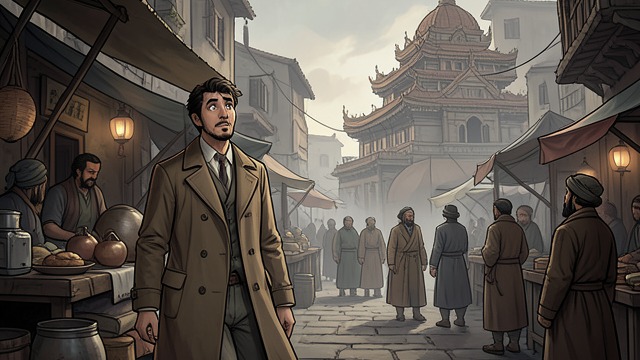
A city explored
Passepartout wanders through Bombay’s festival and visits a pagoda out of curiosity. His desire to see more than the railway station exposes him to danger and legal consequence.
Curiosity without knowledge
He does not understand the temple’s restrictions before entering. The episode shows how travel can become intrusion when observation is not accompanied by understanding.
A Human Life Intervenes
A Human Life Intervenes
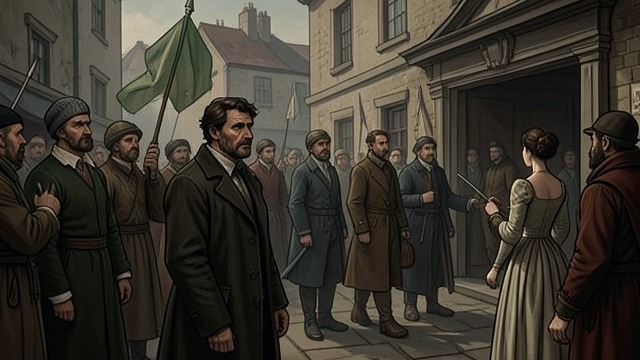
The route becomes moral
Fogg sees Aouda being taken toward a forced sacrifice. Instead of treating the procession as another spectacle, he asks whether they can save her.
Action beyond timetable
The rescue risks the journey, yet Fogg commits the available hours to it. A distant social practice becomes a direct ethical responsibility.
A Wider View of Danger
A Wider View of Danger
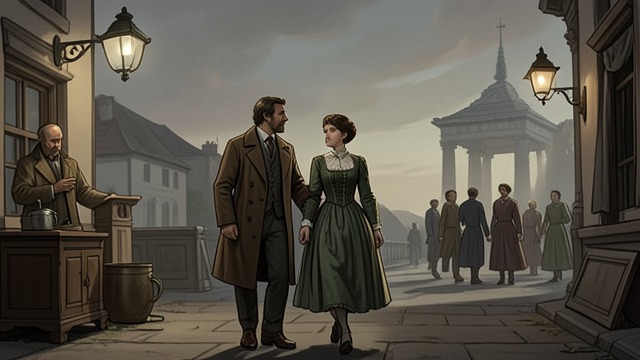
Aouda’s safety considered
Fogg recognizes that rescue from the pyre does not make Aouda safe in India. He offers to accompany her to Hong Kong, where she may seek protection.
Responsibility continues
His obligation does not end once the immediate danger has passed. Protection becomes part of the route, altering the party’s composition and purpose.
The Journey’s Human Return
The Journey’s Human Return
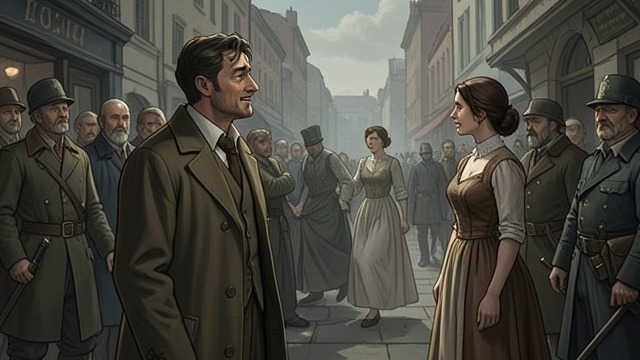
More than distance crossed
Fogg completes the route, but the story measures its consequence through the lives he has affected. Aouda is safe, Passepartout remains loyal, and Fix has confronted his error.
A changed understanding
The journey’s value exceeds its geography and financial result. Its decisive achievement is the human attachment Fogg discovers at the end.
Early October, London
20 October, Bombay
23 October, Bundelcund
November, aboard the Rangoon
21 December, after the wedding decision
